Tell me your idea
Even if the idea is still vague, we work on it together. Write to me on WhatsApp or by email, I reply within 48 hours.
Orvieto
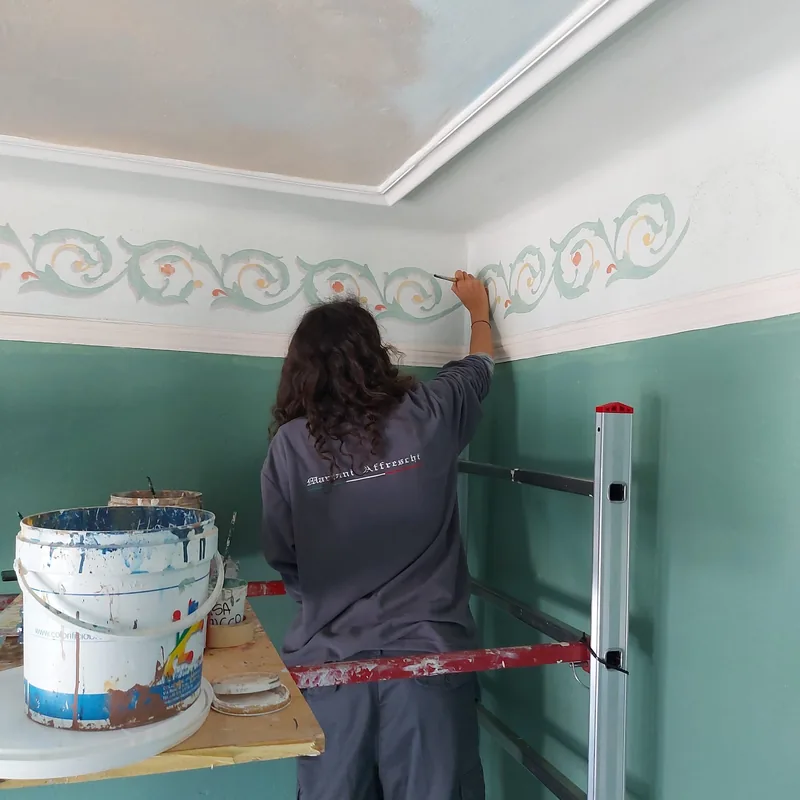
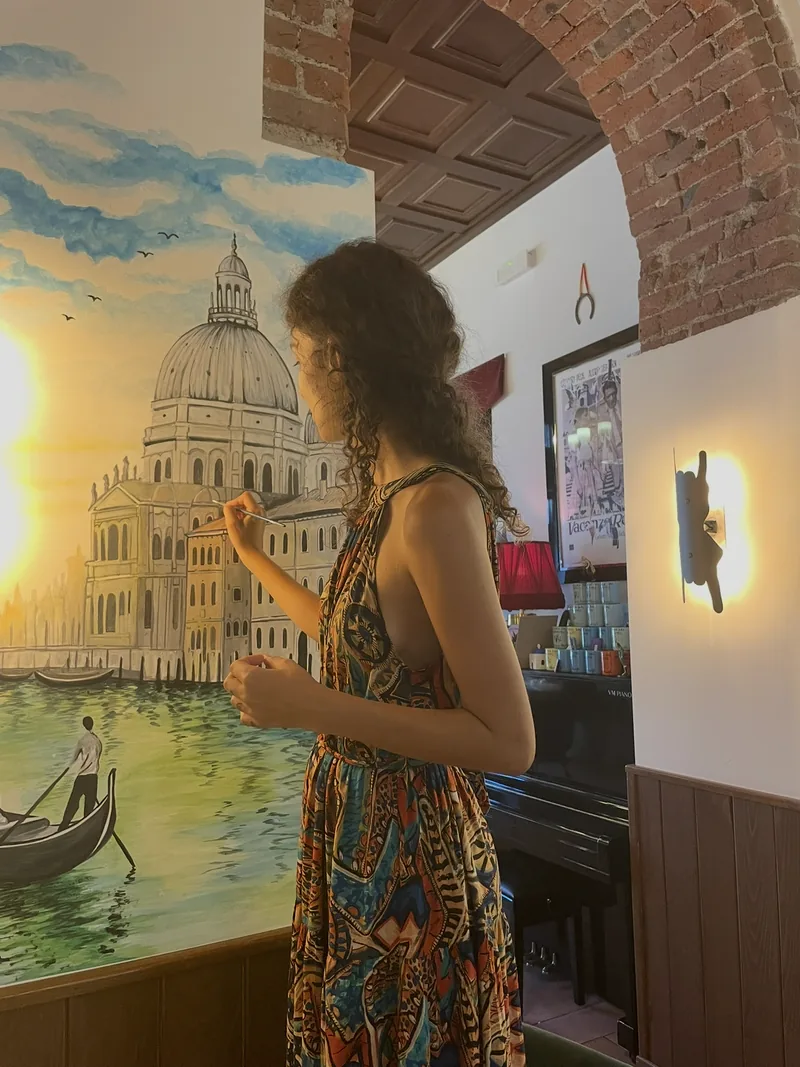
In Orvieto, Giulia Dal Bon paints murals with a brush, in houses, guest houses, workshops, restaurants and shops. Trained at the Brera Academy, she paints on site, from 150 € per square metre. Free quote within 48 hours, two sketches included: you approve the design before Giulia paints.
Tell me your idea, and I will be glad to reply.
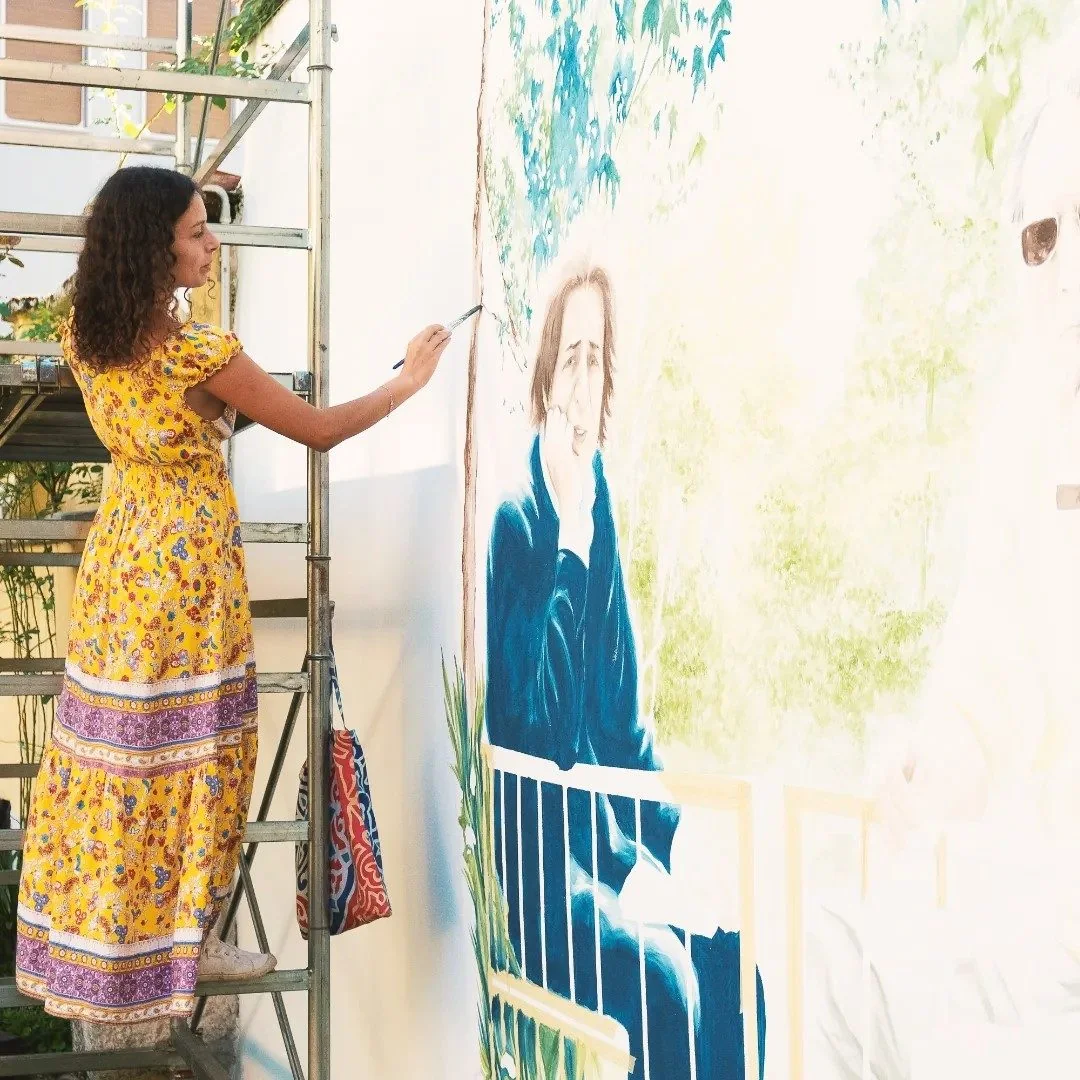
| Simple motif or line drawingFine lines for flowers, patterns, silhouettes or figures… | 150 €/sqm |
|---|---|
| Fully painted subjectColours and shadows for landscapes, portraits or scenes… | 250 €/sqm |
| Trompe-l’oeil or ceilingThe wall opens onto a false window, a sky on the ceiling or an entire landscape… | 350 €/sqm |
| Exterior facade: if needed, scaffolding is added to the quote. | |
Free quote within 48h
Surface and technique set the price; interior or exterior, the condition of the wall, the height, any scaffolding and the timing are then written into the quote.
When you contact me about a mural in Orvieto, here is what happens next.
Even if the idea is still vague, we work on it together. Write to me on WhatsApp or by email, I reply within 48 hours.
Send me a photo of the wall and I draw a sketch straight onto your photo. You tell me what you think. The first two sketches are free.
Once the sketch is approved, I send you the quote and we set the date together.
I come and paint at your place in Orvieto, by brush, and the place stays open while I work.
On 5 April 1499 Luca Signorelli signed a contract with the Opera del Duomo to finish the Chapel of San Brizio, left half-done by Fra Angelico in 1447. A year later, on 23 April 1500, the vaults were already complete; the cycle was finished by 1502 and payments ran on until 1504. The Last Judgement that came out of it, with its bodies in motion across every wall, is the wall Michelangelo came to see before the Sistine Chapel. Giulia travels easily to paint: you send her a photo of the wall and she draws the sketch straight onto it, then you shape the idea together.
What Giulia brings to Orvieto. Orvieto is the city where one painted chapel set a model for everyone who came after. Giulia works in the same direction, by brush and made to measure, on the wall of a home, a hotel or a shop. She loves what the artists here have done. Giulia is a painter, trained at the Brera Academy of Fine Arts in Milan. She exhibits her paintings in art galleries and also paints on walls. Corriere della Sera, Domus and Sky Arte have written about her work, and her mural of over twenty metres dedicated to Gaber and Jannacci can be seen in Milan. The wall is her favourite canvas because it truly becomes part of a place, a unique work made to tell your story.
After the Sack of Rome in 1527, Clement VII took refuge in Orvieto and ordered from Antonio da Sangallo the Younger a well that would guarantee water in case of siege: the Pozzo di San Patrizio, finished in 1537, 62 metres deep and 13 wide, with two helical staircases of 248 steps each, one above the other, each served by its own door, so that mules went down empty by one and came up loaded by the other.
Orvieto is therefore a city where the Renaissance solved a practical problem with a beautiful form, and did it in ten years. Giulia Dal Bon paints there with a brush, in the tufa houses of the centre, the hotels, the restaurants and the wine cellars, using odourless acrylic and two sketches included. From 150 € per sqm, free quote within 48 hours.
In Orvieto, Giulia also paints live in front of an audience: a festival, an opening, a concert or a wedding. The canvas starts blank and ends signed, ready to hang. From 950 € for a wedding, from 400 € for a performance. For a wedding, see live wedding painting in Umbria.
A photo of the wall, its approximate dimensions and the idea you have in mind are enough to receive a quote.
Giulia Dal Bon paints by the square metre: 150 € for a line drawing or a simple motif, 250 € for a fully painted subject, 350 € for trompe-l’oeil or a ceiling. A small mural in a bedroom costs less than a facade that needs preparation and scaffolding. The quote is free: see all prices.
Write to Giulia Dal Bon on WhatsApp or by email, even if the idea is still vague: she replies within 48 hours. Send her a photo of the wall to be painted, she draws a sketch straight onto your photo, you tell her what you think, and the first two sketches are free. Once the sketch is approved, she sends you the quote, from 150 € per sqm in Orvieto, and sets the date with you. She then comes and paints the mural at your place in Orvieto, by brush, and the place stays open while she works.
The square-metre price Giulia Dal Bon quotes includes the paint and materials, the first two sketches and the protective varnish as a finish. While she paints, you tell her what you think, and she adjusts. Added to the quote, when needed, are the scaffolding for a facade and travel costs, agreed together. The quote is free and arrives within 48 hours; a deposit of about 100 € for materials confirms the date, and the balance is settled at the end.
Giulia Dal Bon, a painter trained at the Brera Academy of Fine Arts in Milan. She paints murals by brush in homes, bedrooms, bathrooms, on terraces, pool walls and facades, and travels in Orvieto as she does across Europe. Send her a photo of the wall, its approximate dimensions and your idea, however loose: she replies within 48 hours with a quote and a first proposal. The first two sketches are free. The questions to ask before entrusting a wall in Orvieto are gathered in the guide Who to hire to have a wall painted.
Always. You receive a sketch set on a photo of your own wall, to scale, together with the quote. The first two sketches are free: Giulia shows the work in progress, you give your opinion, and she adjusts. You confirm when you are ready.
The paint goes onto the plaster already in place. In most cases a dusting down is all that is needed before starting. If the surface has cracks or rising damp, Giulia points it out before quoting and proposes the preparation required. Indoors she uses an odourless acrylic: a child’s bedroom in use or a restaurant that stays open can both be painted. An acrylic mural can later be painted over like any wall paint, if you change your mind in ten years.
All year round. Indoors the odourless acrylic lets the room stay in use while she works, in January as in July. Outdoors she needs a dry wall and a mild temperature. Giulia sets the date with you when she quotes, within 48 hours, and gives plenty of notice if the schedule moves.
Yes. What draws the city comes down to a few elements. The cathedral facade and its gold mosaics, the town set on its tufa plateau, and the Umbrian countryside all around. Giulia Dal Bon paints it with a brush, on site. The rate follows the technique: 150 € per sqm for a line drawing, 250 € for a fully painted view. Free quote within 48 hours.
In the tufa houses of the centre and the shops around the cathedral, a botanical motif, an Umbrian landscape or an architectural trompe l’oeil sit well with the pale walls. Everything is painted with a brush, in odourless acrylic.
They are two different crafts. A graffiti artist works with spray cans, with a fast gesture and a graphic finish. A brush-painted mural is built layer by layer, which allows gradients, fine detail and trompe l’oeil: it is a painting made directly on the wall. Indoors, Giulia uses odourless acrylic. And while she paints, people take the time to watch: a brush at work is a show in itself. The choice depends on the finish you are after.
The craft is called mural painting, and the person who practises it is a muralist, a mural artist or a decorative painter. Giulia Dal Bon comes from the brush rather than the spray can: trained at the Brera Academy of Fine Arts in Milan, she exhibits her paintings in art galleries and paints by hand, in Orvieto as elsewhere in Europe. For a mural in Orvieto, a photo of the wall is enough to begin, and the quote arrives within 48 hours.
Yes, with proper surface preparation and quartz paint, made for exterior walls. In Orvieto the tufa of the cliff and the damp that rises through it call for care with the surface: it is assessed before painting. Giulia paints outdoors all year round, on a dry wall and in mild weather: she checks the forecast with you and sets the date.
An interior wall can be painted freely. For a facade visible from the street you generally need the owner’s or the building’s agreement, and a declaration to the local authority: Orvieto’s historic centre is largely protected. Giulia sets out the steps before starting.
It depends on the surface, the level of detail and how easy the wall is to reach. Giulia gives the timing with the quote, within 48 hours, and gives plenty of notice if the schedule moves. The place keeps running while she works: the acrylic is odourless.
The murals Giulia Dal Bon paints last a lifetime indoors: the paint becomes part of the plaster and lives as long as the wall. Outdoors, quartz paint is made for facades, and an anti-salt or anti-pollution varnish extends it further. And if one day you want a change, it can be painted over like any wall paint.
The other places Giulia paints, her portfolio and the towns nearby.
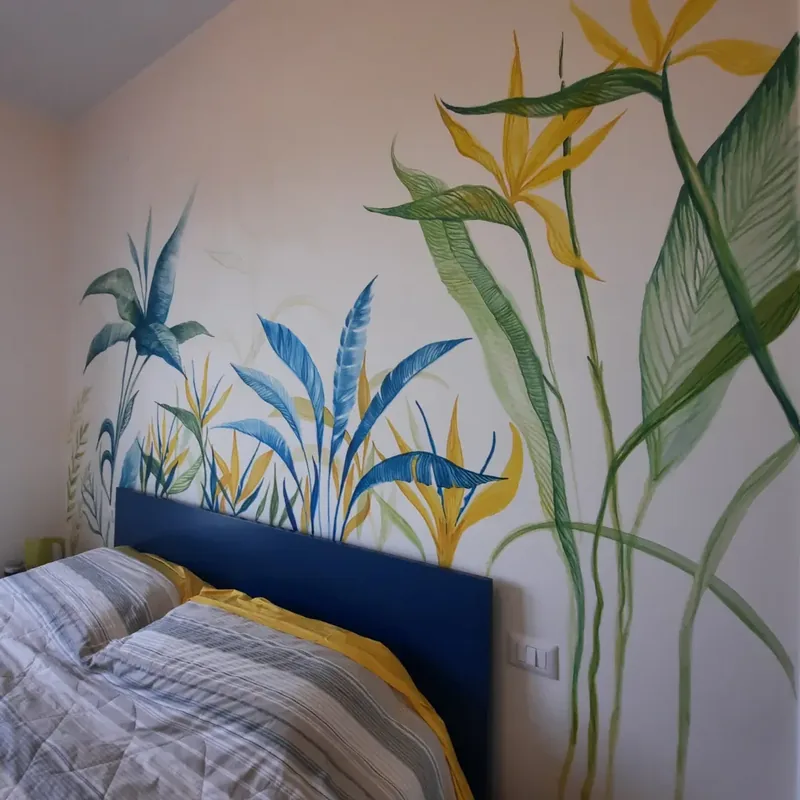
A bedroom, a hallway, a staircase: the walls you look at every day.
A mural for your home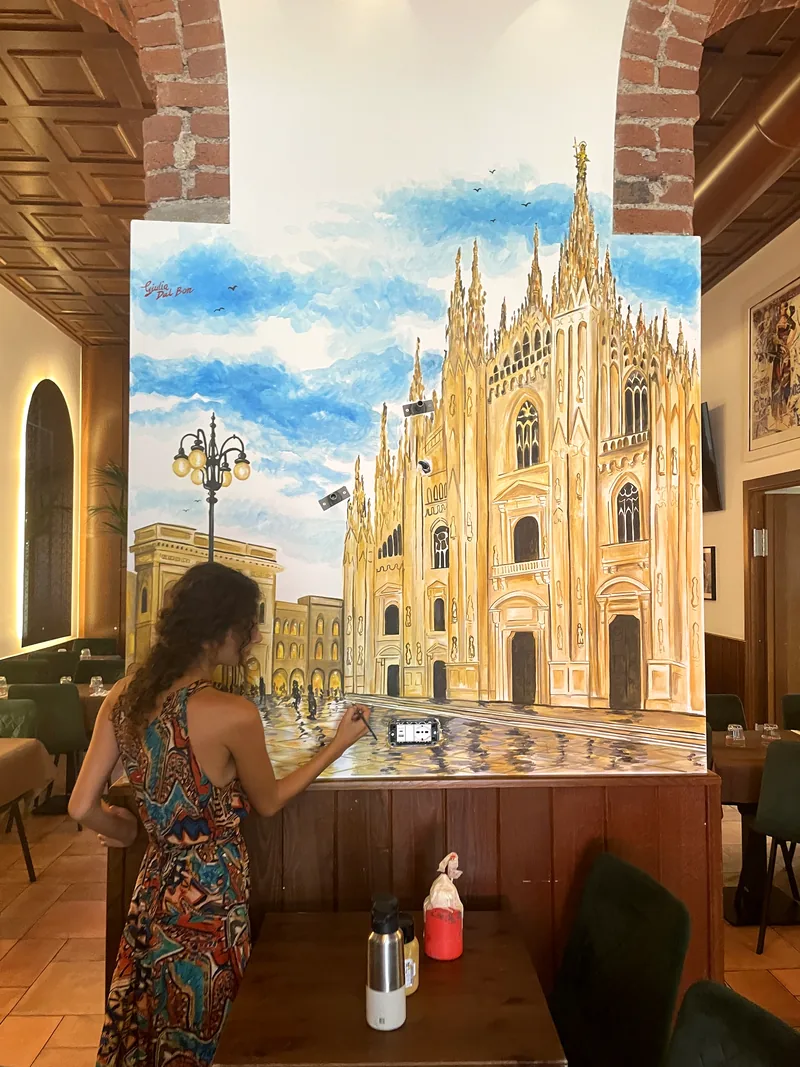
A painted wall gives the room its character, and the place stays open while she works.
A mural for your restaurant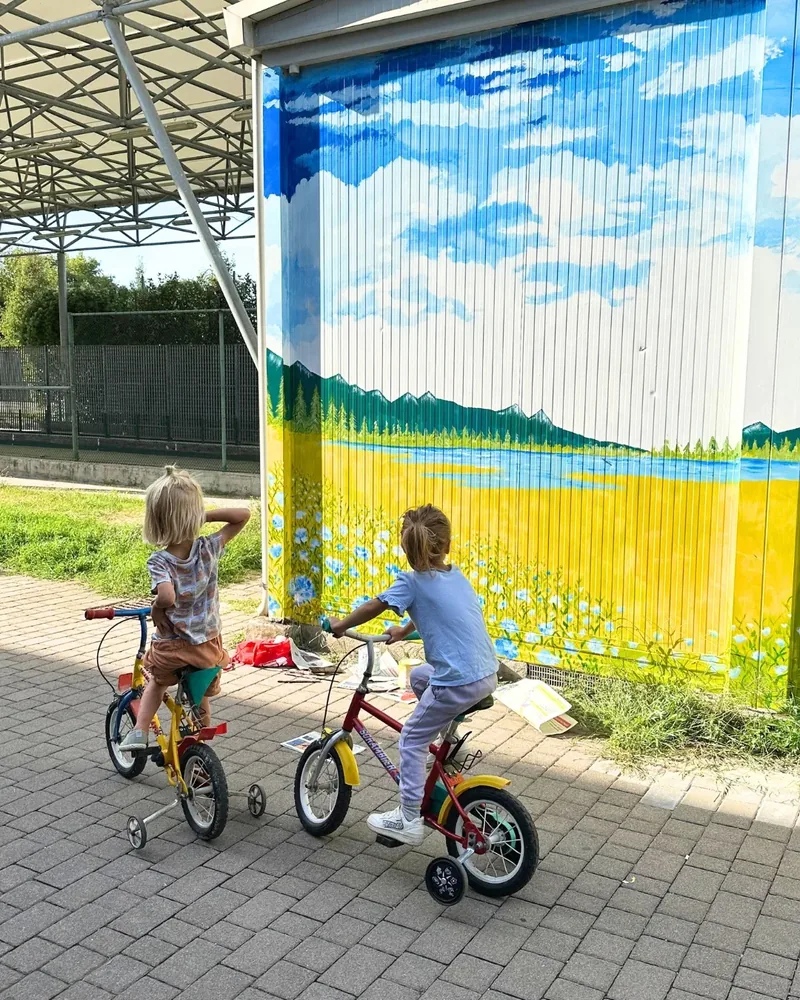
From Orvieto, the mural can open toward these places.
Rome · Florence · Milan · Forte dei Marmi
The mural of over 20 metres for Gaber and Jannacci, in Milan, in the press
Giulia Dal Bon, trained at the Accademia di Belle Arti di Brera, Milan.
In Orvieto, whether it is a house, a villa, a second home or a flat, she paints on an interior wall : the living room, the children’s bedroom and the bedroom. She also paints the kitchen, the bathroom, the entrance, the hallway and the stairwell. A ceiling asks for more work, and she paints it gladly. Outside, she switches to quartz paint on the exterior facade. She also paints on a mobile panel, to carry the painting elsewhere.
In a restaurant, a pizzeria, a trattoria, a café or a bar in Orvieto, the room stays open while she paints: the acrylic is odourless. For a boutique and a shop, she paints the shop window and the shutter, a front you recognise from down the street. In a hotel and a B&B, she paints the lobbies, the corridors and the rooms. In a hair salon and a spa, she paints the treatment-room walls and the reception area. In a medical practice and a waiting room, she paints the reception wall and the corridor. In an office and a showroom, she paints the wall you see on the way in, and the one at the far end.
In the historic centre, Duomo, medieval quarter, Orvieto Scalo and Sferracavallo, send her a photo of the wall: she draws the sketch onto it, you give her your opinion, and she adjusts.
The subject is decided together. A landscape opens up the far end of a room, a floral or botanical motif runs along a wall, a painted sky fills a ceiling, a perspective trompe-l’oeil draws a window on a solid wall. Giulia also paints figures, animals, lettering, painted signs, and reproduces an existing work when you ask her to.
Possible subjects in Orvieto: the Umbrian countryside all around, the cathedral facade and its gold mosaics, the town set on its tufa plateau. Alongside these, a trompe-l’oeil window, a botanical motif or a painted sky remain possible.
A mural is also called a wall mural, an artistic painting on a wall, a wall decoration. People say mural decoration, decorative painting, trompe-l’oeil, hand-painted wall, drawing on a wall, or a painting made directly on the wall: in every case someone paints the wall by hand, layer after layer. In Orvieto, the craft is called mural artist, muralist, wall artist or decorative painter, and it is Giulia Dal Bon’s.
Orvieto holds Signorelli’s Last Judgement, one of the most imitated mural cycles of the Renaissance.
Giulia also travels to Perugia, to Assisi, to Viterbo and to Todi.