Tell me your idea
Even if the idea is still vague, we work on it together. Write to me on WhatsApp or by email, I reply within 48 hours.
Pisa
In Pisa, Giulia Dal Bon paints murals with a brush, in flats, hotels, restaurants, offices and shops. Trained at the Brera Academy, she paints on site, from 150 € per square metre. Free quote within 48 hours, two sketches included: you approve the design before Giulia paints.
Tell me your idea, and I will be glad to reply.
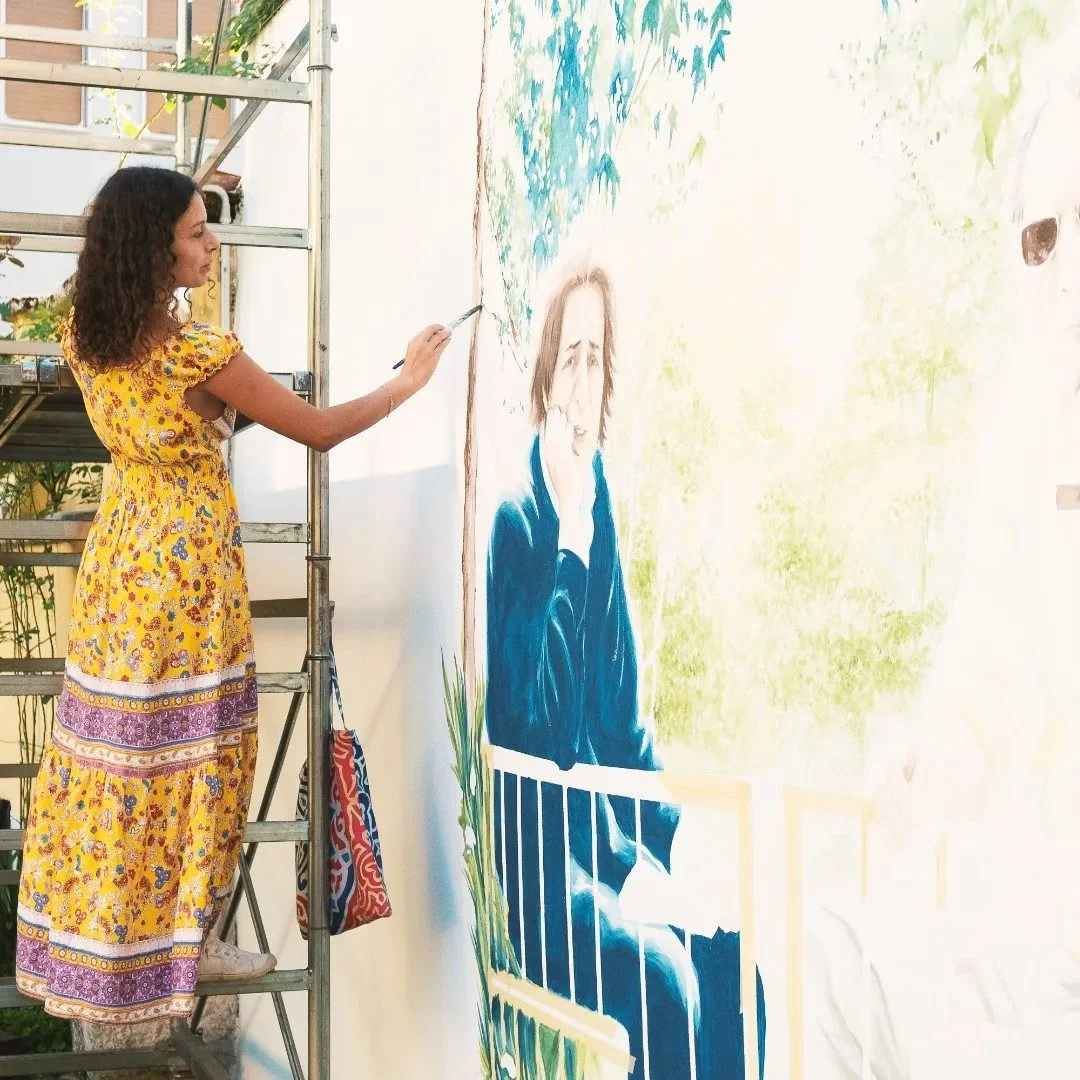
| Simple motif or line drawingFine lines for flowers, patterns, silhouettes or figures… | 150 €/sqm |
|---|---|
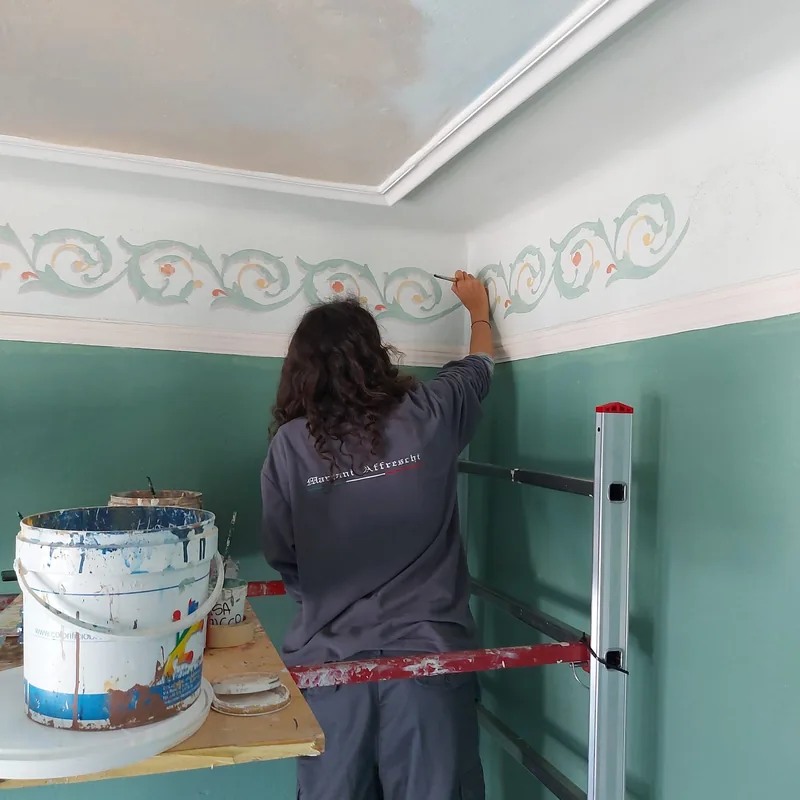
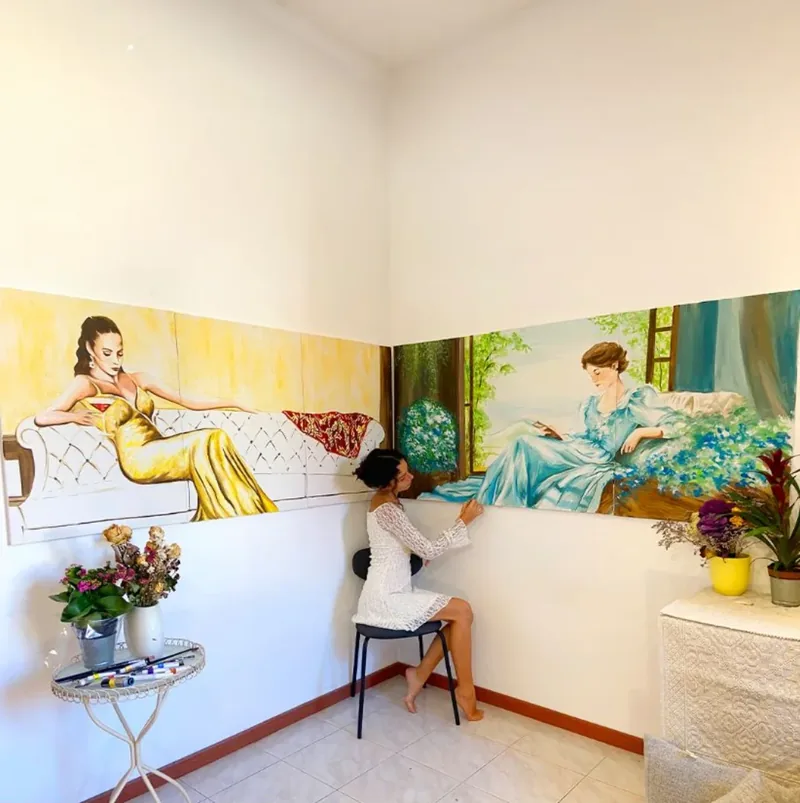
| Fully painted subjectColours and shadows for landscapes, portraits or scenes… | 250 €/sqm |
| Trompe-l’oeil or ceilingThe wall opens onto a false window, a sky on the ceiling or an entire landscape… | 350 €/sqm |
| Exterior facade: if needed, scaffolding is added to the quote. | |
Free quote within 48h
The price is based on the surface and the technique; the quote then takes into account interior or exterior, the condition of the wall, the height, scaffolding if needed and the timing.
When you contact me about a mural in Pisa, here is what happens next.
Even if the idea is still vague, we work on it together. Write to me on WhatsApp or by email, I reply within 48 hours.
Send me a photo of the wall and I draw a sketch straight onto your photo. You tell me what you think. The first two sketches are free.
Once the sketch is approved, I send you the quote and we set the date together.
I come and paint at your place in Pisa, by brush, and the place stays open while I work.
In the Camposanto of Pisa, Buonamico Buffalmacco painted three great frescoes between 1336 and 1341: the Triumph of Death, the Last Judgement and the Thebaid. On 27 July 1944 an incendiary shard melted the lead of the roof: the heat lifted the plaster, and the paintings were detached from the walls to save them. Restored over decades, they returned under the arcades in 2018, and their sinopie now have a museum of their own. Giulia travels easily to paint: you send her a photo of the wall and she draws the sketch straight onto it, then you shape the idea together.
What Giulia brings to Pisa. Pisa is the city that took its frescoes off the walls to save them, then gave them back their place. Giulia paints within that idea of lasting work, by brush and made to measure, on the wall of a home, a hotel or a shop. She loves what the artists here have done. Giulia is a painter, trained at the Brera Academy of Fine Arts in Milan. She exhibits her paintings in art galleries and also paints on walls. Corriere della Sera, Domus and Sky Arte have written about her work, and her mural of over twenty metres dedicated to Gaber and Jannacci can be seen in Milan. The wall is her favourite canvas because it truly becomes part of a place, a unique work made to tell your story.
In June 1989 Keith Haring painted Tuttomondo on the south wall of the church of Sant’Antonio Abate: 180 square metres, thirty interlocking figures, one of his last public works and one of the few designed to stay in place. The city has kept and restored it, a short walk from the station.
Pisa is therefore a city that accepted a contemporary mural on a church, and protected it. Giulia Dal Bon paints there with a brush, in the flats of the centre, the hotels, the restaurants, the offices of the university districts, using odourless acrylic and two sketches included. From 150 € per sqm, free quote within 48 hours.
Live painting is available in Pisa too. Giulia arrives with canvas and paints, works through a wedding, a concert, a festival or a company evening, and the painting is yours at the end of the evening. From 950 € for a wedding, from 900 € for a company evening, from 400 € for a performance at a concert. For a wedding, the reception venues are gathered on the live wedding painting between Pisa and Lucca page.
A photo of the wall, its approximate dimensions and the idea you have in mind are enough to receive a quote.
Giulia Dal Bon’s price is per square metre: 150 € for a line drawing or a simple motif, 250 € for a fully painted subject, 350 € for trompe-l’oeil or a ceiling. A small mural in a bedroom costs less than a facade that needs preparation and scaffolding. The quote is free: see all prices.
Write to Giulia Dal Bon on WhatsApp or by email, even if the idea is still vague: she replies within 48 hours. Send her a photo of the wall to be painted, she draws a sketch straight onto your photo, you tell her what you think, and the first two sketches are free. Once the sketch is approved, she sends you the quote, from 150 € per sqm in Pisa, and sets the date with you. She then comes and paints the mural at your place in Pisa, by brush, and the place stays open while she works.
Giulia Dal Bon’s price per square metre includes the paint and materials, the first two sketches and the protective varnish as a finish. While she paints, you tell her what you think, and she adjusts. Added to the quote, when needed, are the scaffolding for a facade and travel costs, agreed together. The quote is free and arrives within 48 hours; a deposit of about 100 € for materials confirms the date, and the balance is settled at the end.
Giulia Dal Bon, a painter trained at the Brera Academy of Fine Arts in Milan. She paints murals by brush in homes, bedrooms, bathrooms, on terraces, pool walls and facades, and travels in Pisa as she does across Europe. Send her a photo of the wall, its approximate dimensions and your idea, however loose: she replies within 48 hours with a quote and a first proposal. The first two sketches are free.
Always. You receive a sketch set on a photo of your own wall, to scale, together with the quote. The first two sketches are free: Giulia shows the work in progress, you give your opinion, and she adjusts. You confirm when you are ready.
The paint goes onto the plaster already in place. In most cases a dusting down is all that is needed before starting. If the surface has cracks or rising damp, Giulia points it out before quoting and proposes the preparation required. Indoors she uses an odourless acrylic: a child’s bedroom in use or a restaurant that stays open can both be painted. An acrylic mural can later be painted over like any wall paint, if you change your mind in ten years.
All year round. Indoors the odourless acrylic lets the room stay in use while she works, in January as in July. Outdoors she needs a dry wall and a mild temperature. Giulia sets the date with you when she quotes, within 48 hours, and gives plenty of notice if the schedule moves. Indoors can be painted even in winter, thanks to the odourless acrylic that keeps the room liveable.
Yes, and the city lends itself to it. The Piazza dei Miracoli, the leaning tower, the baptistery and the Camposanto where Buffalmacco painted between 1336 and 1341, and the ochre facades along the Arno. Giulia Dal Bon composes the view for the wall in front of her. As a line drawing, 150 € per sqm; painted in colour, 250 € per sqm. Free quote within 48 hours.
In the riverside houses and the shops of the centre, a botanical motif, a Tuscan landscape or a painted sky on a ceiling sit well with the architecture. Everything is painted with a brush, in odourless acrylic. The first two sketches are free and mounted on a photo of your wall: you choose the subject seeing it already in place. For a wall in Pisa, the guide What subject to choose for a mural goes through the subjects room by room.
They are two different crafts. A graffiti artist works with spray cans, with a fast gesture and a graphic finish. A brush-painted mural is built layer by layer, which allows gradients, fine detail and trompe l’oeil: it is a painting made directly on the wall. Indoors, Giulia uses odourless acrylic. And while she paints, people take the time to watch: a brush at work is a show in itself. The choice depends on the finish you are after.
The craft is called mural painting, and the person who practises it is a muralist, a mural artist or a decorative painter. Giulia Dal Bon comes from the brush rather than the spray can: trained at the Brera Academy of Fine Arts in Milan, she exhibits her paintings in art galleries and paints by hand, in Pisa as elsewhere in Europe. For a mural in Pisa, a photo of the wall is enough to begin, and the quote arrives within 48 hours.
Yes, with proper surface preparation and quartz paint, made for exterior walls. In Pisa the damp air of the Arno and the closeness of the sea call for care with the surface: it is assessed before painting. Near the coast an anti-salt varnish can be added. Giulia paints outdoors all year round, on a dry wall and in mild weather: she checks the forecast with you and sets the date.
An interior wall can be painted freely. For a facade visible from the street you generally need the owner’s or the building’s agreement, and a declaration to the local authority: Pisa’s historic centre is largely protected. Giulia sets out the steps before starting.
It depends on the surface, the level of detail and how easy the wall is to reach. Giulia gives the timing with the quote, within 48 hours, and gives plenty of notice if the schedule moves. The place keeps running while she works: the acrylic is odourless.
An acrylic mural by Giulia Dal Bon lasts a lifetime indoors: the paint becomes part of the plaster and lives as long as the wall. Outdoors, quartz paint is made for facades, and an anti-salt or anti-pollution varnish extends it further. And if one day you want a change, it can be painted over like any wall paint.
The other places Giulia paints, her portfolio and the towns nearby.
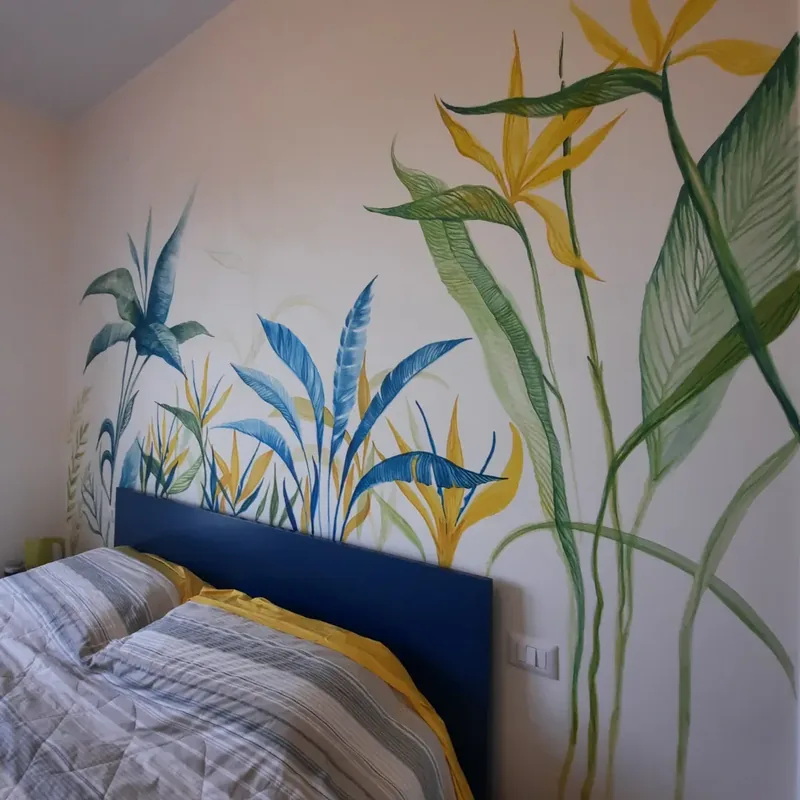
A bedroom, a hallway, a staircase: the walls you look at every day.
Home and villa murals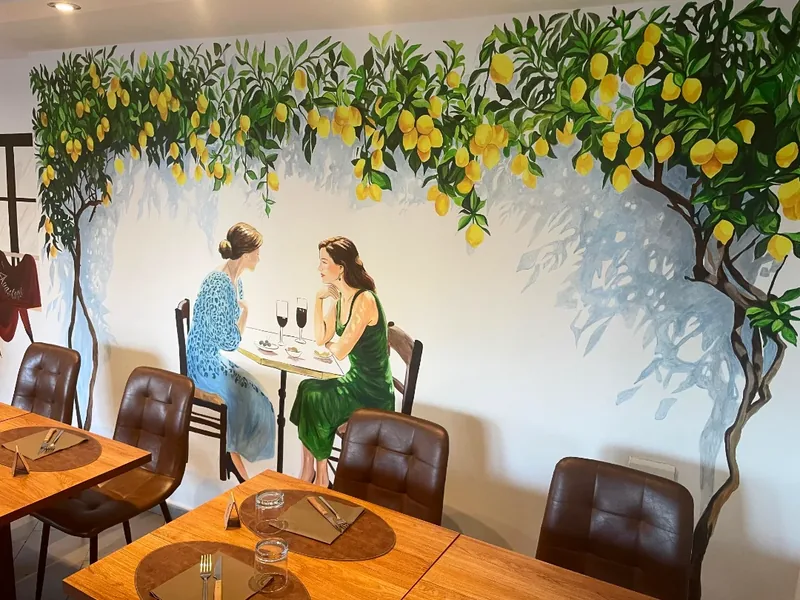
A painted wall gives the room its character, and the place stays open while she works.
Restaurant and café murals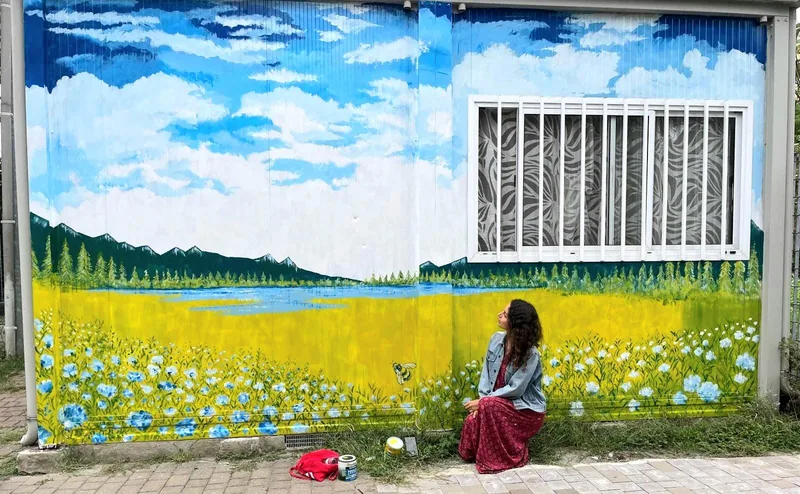
From Pisa, the mural can open toward these places.
Tuscany · Lucca · Florence · Milan · Forte dei Marmi
The mural of over 20 metres for Gaber and Jannacci, in Milan, in the press
Giulia Dal Bon, trained at the Accademia di Belle Arti di Brera, Milan.
In Pisa, whether it is a house, a villa, a second home or a flat, Giulia paints on an interior wall : the living room, the children’s bedroom and the bedroom. She paints the kitchen, the bathroom, the entrance, the hallway and the stairwell just as readily. A ceiling is painted like a wall, working overhead. Outdoors, she uses quartz paint on the exterior facade, with a protective varnish to finish. A mobile panel is painted separately, and moves with you.
In a restaurant, a pizzeria, a trattoria, a café or a bar in Pisa, she paints the dining-room wall, and service carries on while she works. In a boutique and a shop, window and shutter are painted by hand, and change with the seasons. In a hotel and a B&B, she paints the lobbies, the corridors and the rooms. In a hair salon and a spa, she paints the wall you look at while you wait. In a medical practice and a waiting room, she paints the waiting room and the corridor leading to it. For an office and a showroom, she paints reception, the corridor and the meeting room.
In Historic centre, the lungarni, Santa Maria, the Square of Miracles, San Martino and Marina di Pisa, you send her a photo of the wall and she draws the sketch straight onto it, then you shape the idea together.
A wall can carry a landscape, a floral or botanical motif, lettering, a painted sign. A ceiling takes a sky. A perspective trompe-l’oeil opens a window or a corridor on a solid wall. Giulia also paints figures and animals, and reproduces a work on request.
Possible subjects in Pisa: the ochre facades along the Arno, the Piazza dei Miracoli, the leaning tower, the baptistery and the Camposanto. And always the trompe-l’oeil window, the botanical motif and the painted sky on a ceiling.
The craft goes by several names, and each of them is right about something. Mural and wall mural speak of the wall, wall decoration and mural decoration speak of the room, decorative painting speaks of the gesture, trompe-l’oeil speaks of the effect. A hand-painted wall, a drawing on a wall, a painting made directly on the wall: still the same thing. In Pisa, it is called a mural artist, a muralist, a wall artist, a decorative painter.
Pisa keeps Buffalmacco’s frescoes in the Camposanto, detached after the fire of 1944 and back under the arcades since 2018.
Giulia also travels to Pistoia, Prato, San Gimignano, Viareggio, Bolgheri, Camaiore, Capalbio and Carrara.